Sherman, TX · Garage Door Service
Garage door repair in Sherman, TX for homes built 1967-2005. We know the springs, openers, and tracks that fail in this area's housing stock and cold winters.
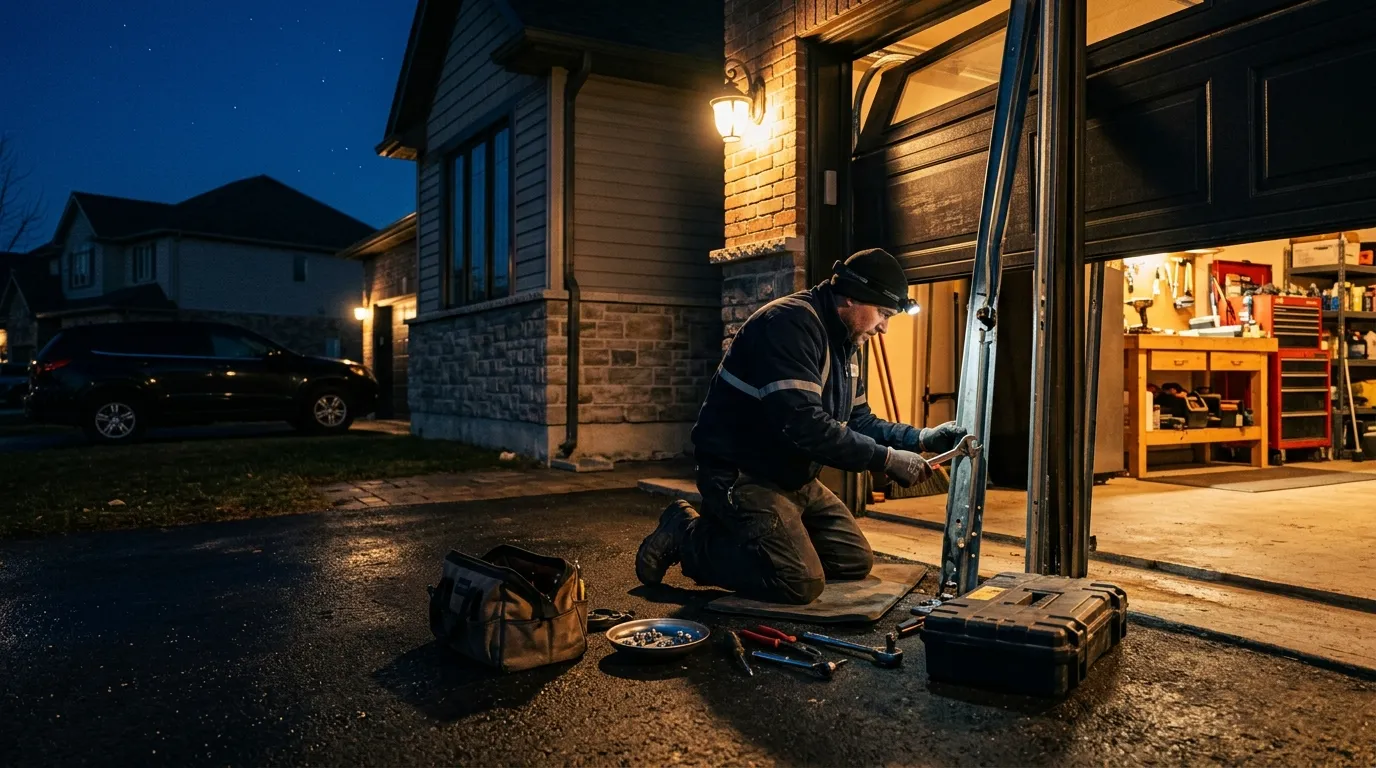
Sherman's housing mostly went up between 1967 and 2005, with the median build year sitting around 1984, and that matters more than people think. A door installed in the 1980s has had three or four decades of temperature swings to work its hardware loose. We're in a cold-moderate climate band here, which means winter mornings that tighten steel springs and summer afternoons that expand them again, over and over, year after year. That cycle is what kills torsion springs and wears out the galvanized coating on cables long before the door itself looks old.
Across the 14 areas we cover, most of the stock is 1980s and 90s construction, so we see the same handful of failure points on repeat: original torsion springs that were never rated for 30-plus years of cycling, steel rollers instead of nylon, and openers that are the second or third one installed on the same track since the house was built. None of this is dramatic. It's just metal fatigue and one owner's motor gasket giving out after enough hot-cold cycles.
A newer subdivision might get another five years out of the same parts. A house built when Sherman's median dates back to, it's already past due.
Because so much of Sherman sits in that 1967-2005 build window, we keep stock geared toward the hardware that shipped standard in those years: standard-wind torsion springs in the sizes used on single and double doors from that era, steel and nylon rollers, galvanized lift cables, and drums sized for the older extension-spring setups some of the earliest houses still have. We also carry weatherseal and bottom astragal rated for the cold-moderate swings we get here, since a door that leaks air at the threshold on a January morning is usually a cheap fix, not a new door.
What we don't stock on the truck is anything custom - oversized carriage-style doors, specialty insulated panels, or openers with proprietary boards that some builders used in one-off installs. Those get ordered, and the lead time is out of our hands. If your door falls into that category we'll tell you straight instead of guessing at a same-day fix.
For the ordinary torsion spring and opener failures that make up most calls in this area, the part is usually already on the truck when we show up.
If the door won't budge and there's a gap where the spring used to be taut across the top, that's a broken torsion spring - the single most common call we get from houses built in Sherman's 1980s-heavy stock. If the door opens partway then reverses, or the opener motor hums but nothing moves, that's usually a worn drive gear or a capacitor going out on an aging unit, more common the older the opener is.
A door that shudders, drags on one side, or comes off track slightly during opening points to bent track or a roller that's finally given out after years of temperature cycling. Cables fraying near the bottom bracket show up more in houses that still have the original 1980s-vintage hardware, since galvanized cable coating breaks down slowly and nobody notices until strands start showing.
One thing we won't do is tell you it's the opener when it's really the spring, or the other way around, just to get a truck rolled twice. Most of these symptoms point to one part, and we diagnose it on the first visit.
A torsion spring replacement means winding down the old spring safely, pulling the shaft, and installing a matched pair sized to your door's weight - not universal, since a mismatched spring either won't lift the door or will slam it open. That's a same-visit repair on almost every call in this area given how common the failure is.
Opener issues take more diagnosis: we check the circuit board, the capacitor, the gears, and the safety sensors before replacing anything, because a bad sensor can look exactly like a dead motor from the driveway. Track and roller work is straightforward on most of the doors we see here - realign or replace the bent section, swap worn rollers, and check the cable tension while we're in there.
Here's the honest limitation: if a door is old enough and worn enough on multiple fronts at once - spring, opener, and track all going at the same time - replacement is usually cheaper than piecing together three repairs on a door that's already near the end of its life. We'll tell you when that's the case instead of running up a bill on a door that won't last another winter anyway.
Most homes in our service area were built between 1967 and 2005, and the cold-moderate climate here puts steel springs through repeated expansion and contraction every year. A spring rated for that stress eventually fatigues, and houses with the original hardware are the ones we get called to most.
Yes, we cover the surrounding area including Southmayd, Howe, Denison, Pottsboro, Tom Bean, Bells, Sadler, Van Alstyne, Savoy, Whitewright, Whitesboro, Collinsville, Gunter, and Tioga.
Often, yes, if the motor and gears are still available or a compatible replacement drive fits your existing track. Some older proprietary boards need to be special-ordered, which we'll flag upfront rather than promise a same-day fix we can't deliver.
When the spring, opener, and track are all failing at once on an older door, yes. Piecing together three separate repairs on hardware that's already near the end of its service life usually costs more than replacing the door outright, and we'll tell you plainly when that's the situation.
Call now or request a free quote - same-day service on most repairs, upfront written pricing.