Sherman, TX · Garage Door Service
Sherman Garage Door Pros installs replacement doors sized for Sherman's 1980s-era openings and built for the area's cold-moderate winters. Serving Sherman, TX and the surrounding towns.
Most of the housing in this service area went up between 1967 and 2005, with the median build year landing right around 1984. That means a large share of the garage doors out there are the same units the house shipped with - steel or aluminum panels on hardware that was never designed to last forty years. Across the 14 named areas we cover, from Southmayd out to Tioga, the pattern repeats: 1980s and 90s construction, single-layer panels, no insulation, and openers that were add-ons installed a decade or two after the house went up.
Sherman sits in a cold-moderate climate band, which doesn't sound dramatic next to true winter country, but it's still forty-plus years of freeze-thaw cycling on doors that were built for a mild-weather era of manufacturing. Panels warp at the seams, tracks pull out of square as the slab settles, and springs sized for a lighter, thinner door start failing under a heavier replacement panel someone bolted on halfway through. None of that is a defect - it's just what happens to a door built in 1984 that's still doing its job in a house from 1984.
We stock hardware sized for the standard openings that show up across the 1980s and 90s stock common in this area - 8 and 9-foot double door widths and the single-car sizes that match houses from that era. That covers the large majority of the jobs we run. Median household income in the service area sits at $74,773, and most of what we stock reflects that: solid, mid-range insulated panels rather than high-end custom lines, because that's what most of the calls actually need.
What we don't carry on the truck is anything custom-width or non-standard - a door built for an opening that doesn't match the usual sizing from that construction period. If your house has a garage opening that was framed oddly or altered at some point, that's a special-order door, and it takes longer to get than a standard replacement. We'll tell you that up front rather than quote a install date we can't hit.
If your door is original to a house built anywhere in that 1967-2005 window, the signs usually show up the same way. Panels that look fine from the driveway but flex or boom when the door moves. A door that's noticeably heavier or lighter feeling on one side than it used to be, because a spring or a panel has been replaced piecemeal over the years and doesn't match the rest. Cold mornings where the door drags or hesitates partway up - that's a symptom of a door and track combination that was never insulated for a climate with real winter swings, even a moderate one.
Another tell: an opener that's clearly newer than the door itself, straining against a panel and hardware set it wasn't matched to. That mismatch is common in houses from this era because openers got added or replaced separately from the door, sometimes years apart. None of this means the door is unsafe right now. It means it's working harder than a current door would, and that gap tends to close through repair calls that add up faster than one clean replacement.
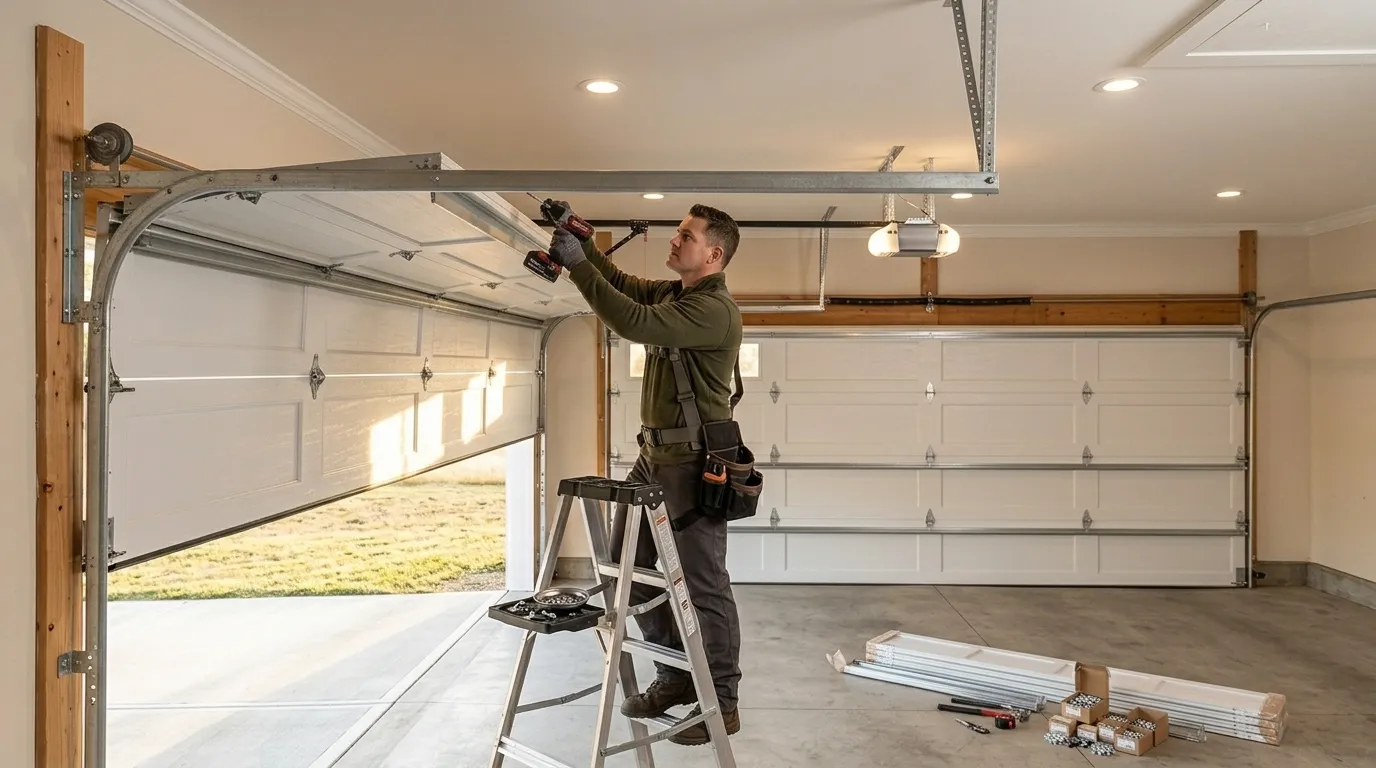
Installation starts with measuring the actual opening, not assuming it matches spec - houses built across four decades in this area don't all frame the same, even within the same subdivision. We pull the old door and track, check the header and jamb for square, and size the new door and torsion spring to the actual weight and width, not the sticker size.
For most of the service area that means a standard insulated panel door, since the openings match the common sizing from the 1980s and 90s construction that dominates the stock here. We set the opener to match the new door's weight rather than reuse the old settings, because a spring or opener tuned for the old panel will fight a new one that's a different weight. The job wraps with a full cycle test - open, close, auto-reverse, balance - before we call it done. Custom-width doors take longer to source than standard sizes, and we'll say so at the quote stage rather than after the old door is already off the hinges.
If the door is original to a house built in the 1970s through the 90s, a repair on one part often just exposes the next worn part. We'll look at the whole door and track before recommending replacement - sometimes a spring swap really is enough, and we'll say so.
Usually yes. Most homes in this area were built with openings that match standard door widths, so a new door drops into the existing frame. Openings that were altered or built off-spec sometimes need extra framing work, which we check before quoting.
Yes, insulated panels are standard stock for us given the cold-moderate winters here. They're a common upgrade for homeowners replacing an original 1980s or 90s door that was never insulated to begin with.
We run installs from Southmayd (5 miles) out through Tioga (20 miles), covering Howe, Denison, Pottsboro, Tom Bean, Bells, Sadler, Van Alstyne, Savoy, Whitewright, Whitesboro, Collinsville, and Gunter along the way.
Call now or request a free quote - same-day service on most repairs, upfront written pricing.