Sherman, TX · Garage Door Service
Homes in Sherman, TX mostly date from 1967 to 2005, so a garage door service call means checking springs, tracks, and openers sized for that era's builds.
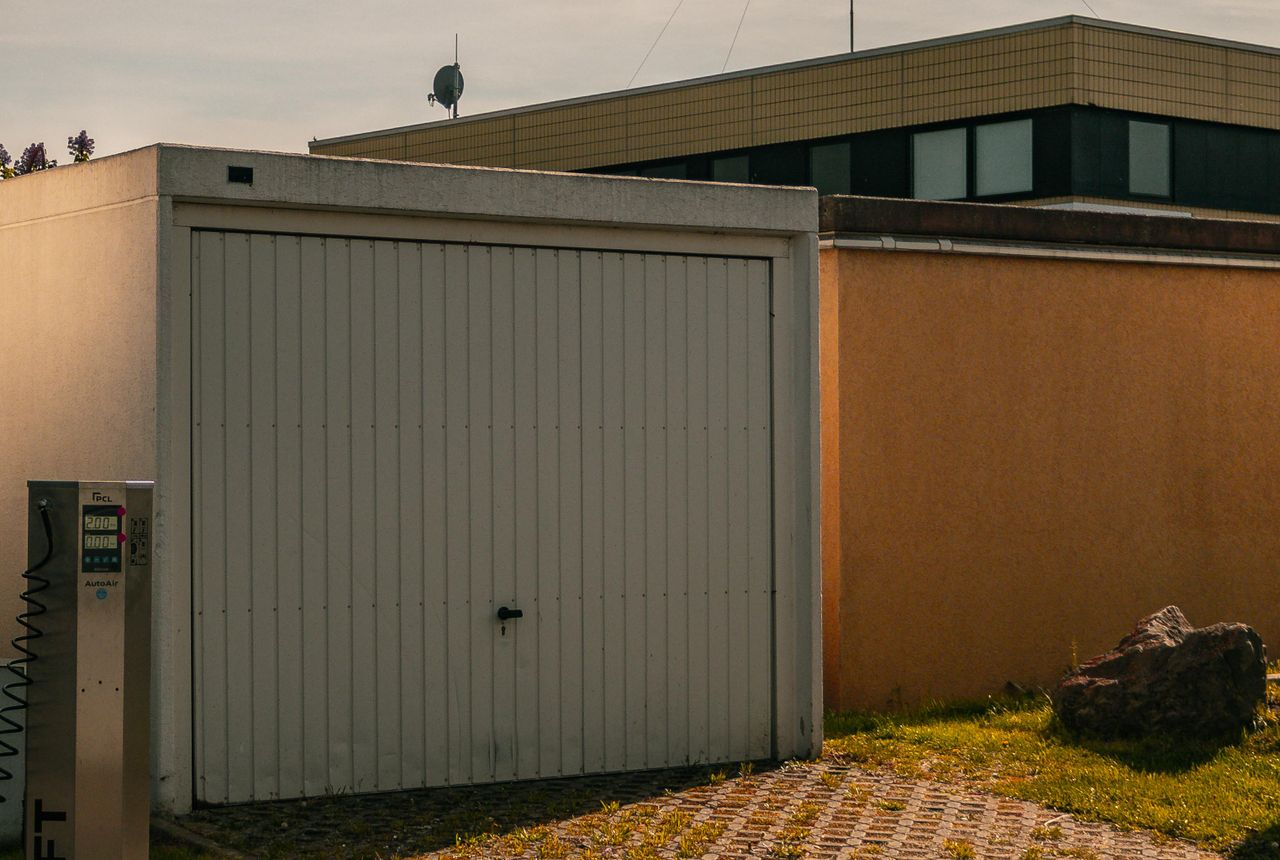
A lot of the doors we look at in Sherman are original or close to it, since most housing in this service area went up between 1967 and 2005, with the median sitting around 1984. Doors from that stretch often run on a single torsion spring, even on a full double-car door, which was common building practice at the time but means more strain on one part. If that spring lets go, the door can drop fast, and the cable or drum can come off with it. That is the point where a homeowner should stop and call rather than climb a ladder. A stuck door, a spring with a visible gap in the coil, a cable that has jumped the drum, or a door that will not respond to the opener at all - those are service calls, not weekend projects.
Not everything needs a truck out, though. A dented bottom panel that still opens and closes fine, a squeaky roller that quiets down with lubricant, a remote battery that needs swapping - those are things an owner can handle without paying for a visit. We would rather tell you that up front than run a call for something you could fix in five minutes.
Sherman sits in a cold-moderate climate band, which means the door hardware goes through real temperature swings over the year rather than staying in one range. Steel contracts in cold mornings and expands again by afternoon, and on doors that are already 20 to 40 years old, that cycle works on metal fatigue that has been building for decades. Torsion springs lose a little tension with every cycle, and cold makes lubricant on tracks and hinges thicken up, which is why a door can feel sluggish or noisy on a cold morning even though nothing is technically broken yet.
Openers are affected too. Photo-eye sensors near the floor can pick up condensation in cold, damp conditions and refuse to let the door close, which reads to most owners as the opener failing when it is really a sensor issue. We see more of these calls in the colder months than any other kind. None of this means the door is failing outright - it usually means the hardware is doing exactly what aging steel and springs do in a climate that swings, and it is worth a look before a small stiffness turns into a stuck door.
On a typical call, we are working through the same sequence regardless of what the homeowner thinks the problem is: spring tension and wear, track alignment, roller condition, cable and drum seating, and opener force and limit settings. Because so much of the housing stock across this service area - 14 named communities from Southmayd out to Tioga - was built in the 1980s and 90s, we are usually dealing with hardware from a fairly narrow window of building practice, which makes the diagnosis more predictable than it would be in a mixed-age market.
With roughly 20,213 households and 10,699 owner-occupied houses spread across this area, the volume of doors built to those same-era standards is significant, and it shows in the kind of calls we run. A door that will not stay open is almost always a spring or cable issue on these builds. A door that reverses partway through closing is almost always an opener sensor or force setting, not a structural problem with the door itself. Telling those apart before we touch anything is what a service call is actually for - it is not a guess-and-replace visit.
The cold-moderate swings this area gets do specific things to garage doors that owners do not always connect to the weather. Freeze-thaw cycling under the slab where the track is anchored can shift the track mounting slightly over a winter, which shows up as a door that binds on one side or rubs a weatherstrip it did not used to touch. Condensation forms on steel panels and on photo-eye lenses during cold, humid stretches, which is a separate issue from rust but gets mistaken for it.
On the wider two-car doors common in the ranch-style builds from this era, wind load on the panel puts more stress on the end hinges and the top roller brackets than a single door sees, and that stress adds up slowly over years rather than showing up as one dramatic failure. None of this means the weather here is unusually harsh - it is a normal cold-moderate cycle - but it is steady, and steady cycling on 30-to-50-year-old hardware is exactly what turns a minor stiffness into a call for a broken spring or a bent track a year or two later.
If the door will not open or close, drops suddenly, or a cable or spring looks broken or loose, call. If it is cosmetic damage, a noisy roller, or a dead remote battery, those are usually fine to handle yourself. Given how much of the housing in this area dates to 1967-2005, a lot of the springs and cables we see are original to the build.
Sherman sits in a cold-moderate climate band, so steel hardware contracts and expands through real seasonal swings. Lubricant thickens, torsion springs lose a bit of tension with every cold cycle, and photo-eye sensors can pick up condensation and refuse to let the door close, which feels like a bigger problem than it usually is.
Yes. We run calls across the service area, including Southmayd about 5 miles out, Howe at 8, Denison and Pottsboro around 10, and farther towns like Van Alstyne, Whitesboro, and Tioga up to about 20 miles from Sherman.
It depends on what is actually wrong. A worn spring or cable on an otherwise sound door from the 1980s or 90s is usually a straightforward repair. If the track is badly bent or the door itself has failed structurally, replacement can make more sense than repeated repairs - that is a call we make on site, not something we decide sight unseen.
Call now or request a free quote - same-day service on most repairs, upfront written pricing.